Marriage Biodata Format PDF: Complete Guide & 8 Ready-to-Fill Indian Matrimonial Templates
Structured English and Hindi shadi biodata layouts for working professionals, traditional families, Hindu, Muslim, Sikh, and Jain matrimonial introductions with dignified partner-preference wording.
Get the complete formatted PDF right in your inbox & instant browser download.
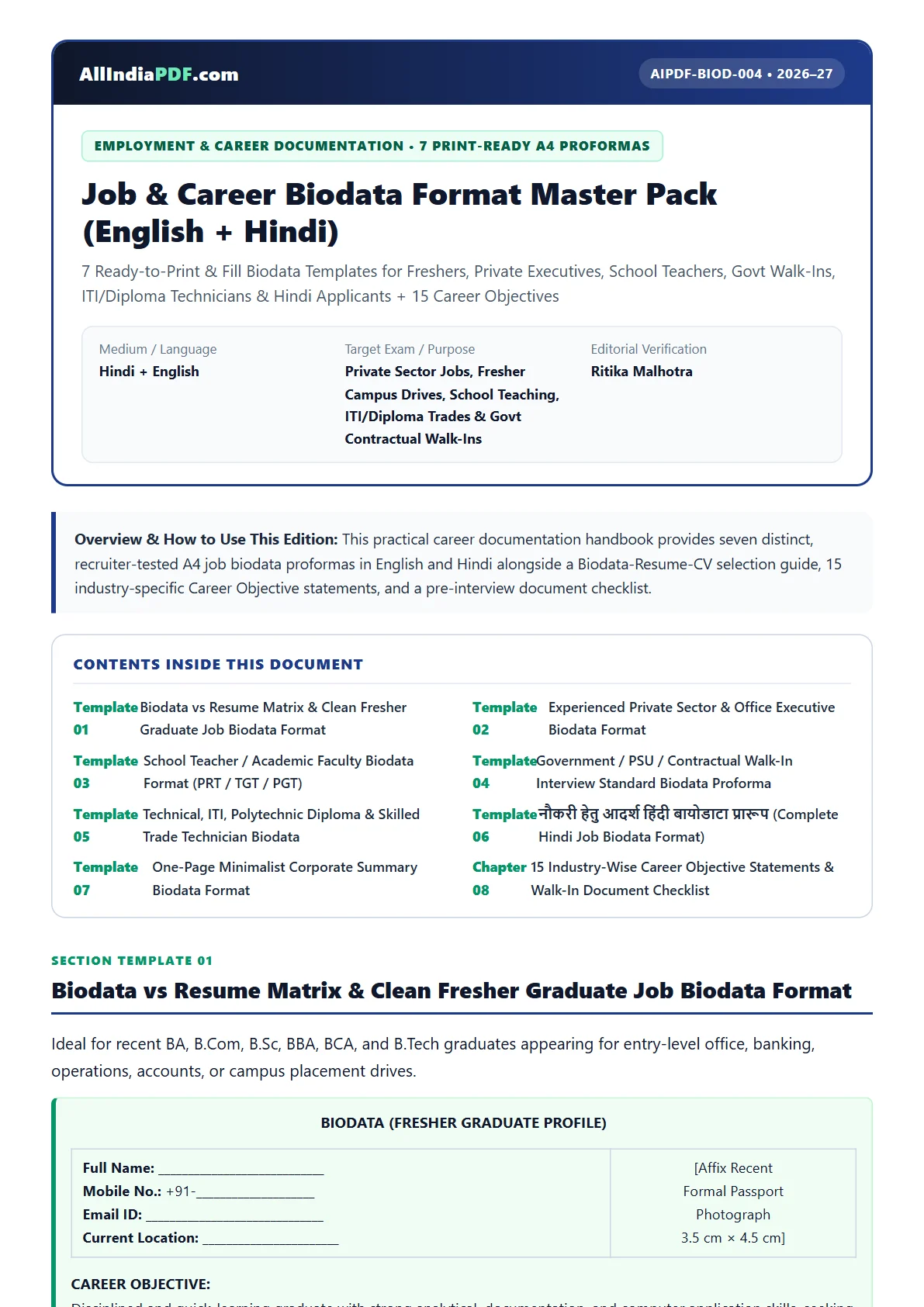
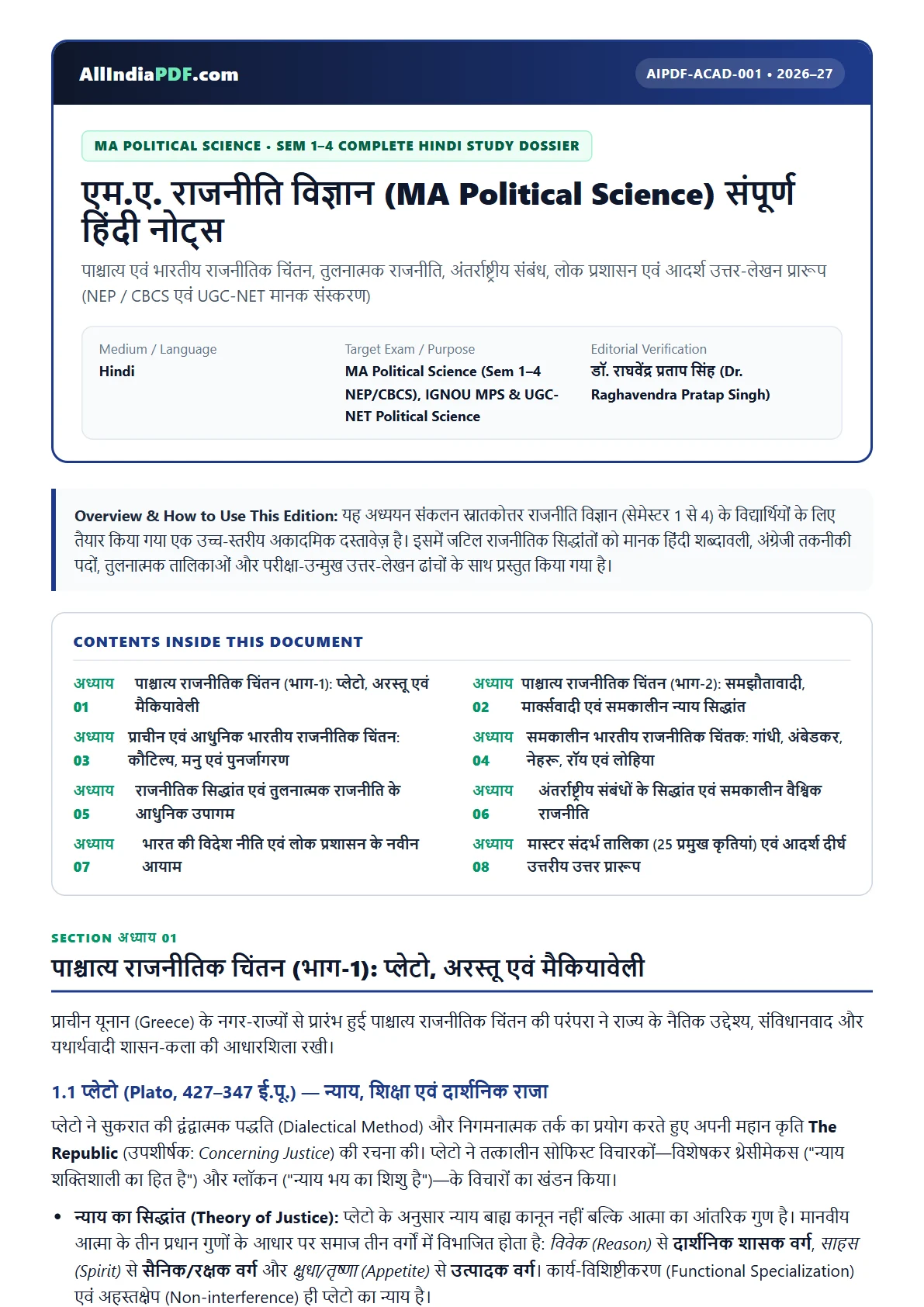
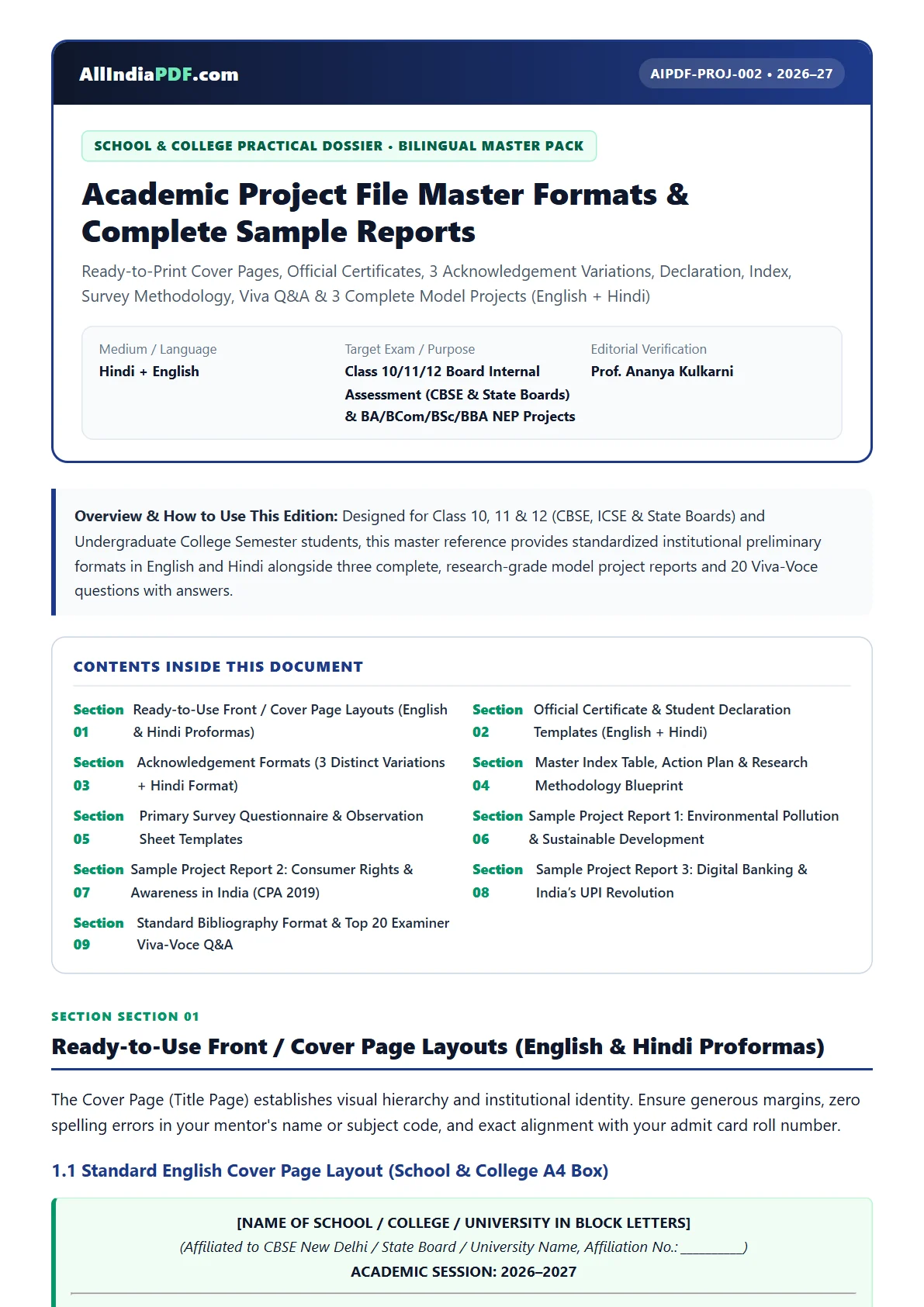
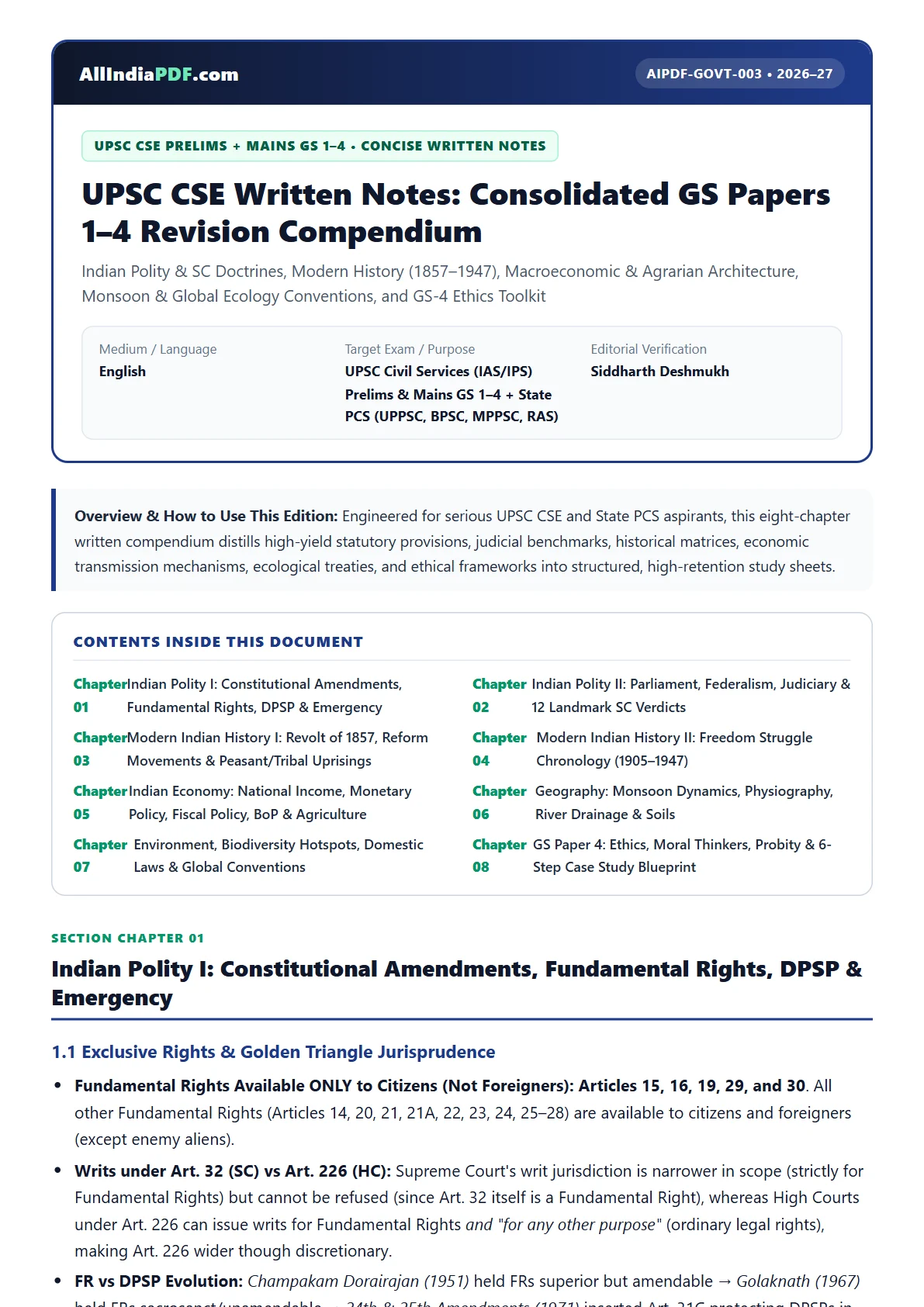
Inside Document Preview (Pages 1–3 of 10)
Actual print-ready pages from the verified 2026–27 PDF compilation.
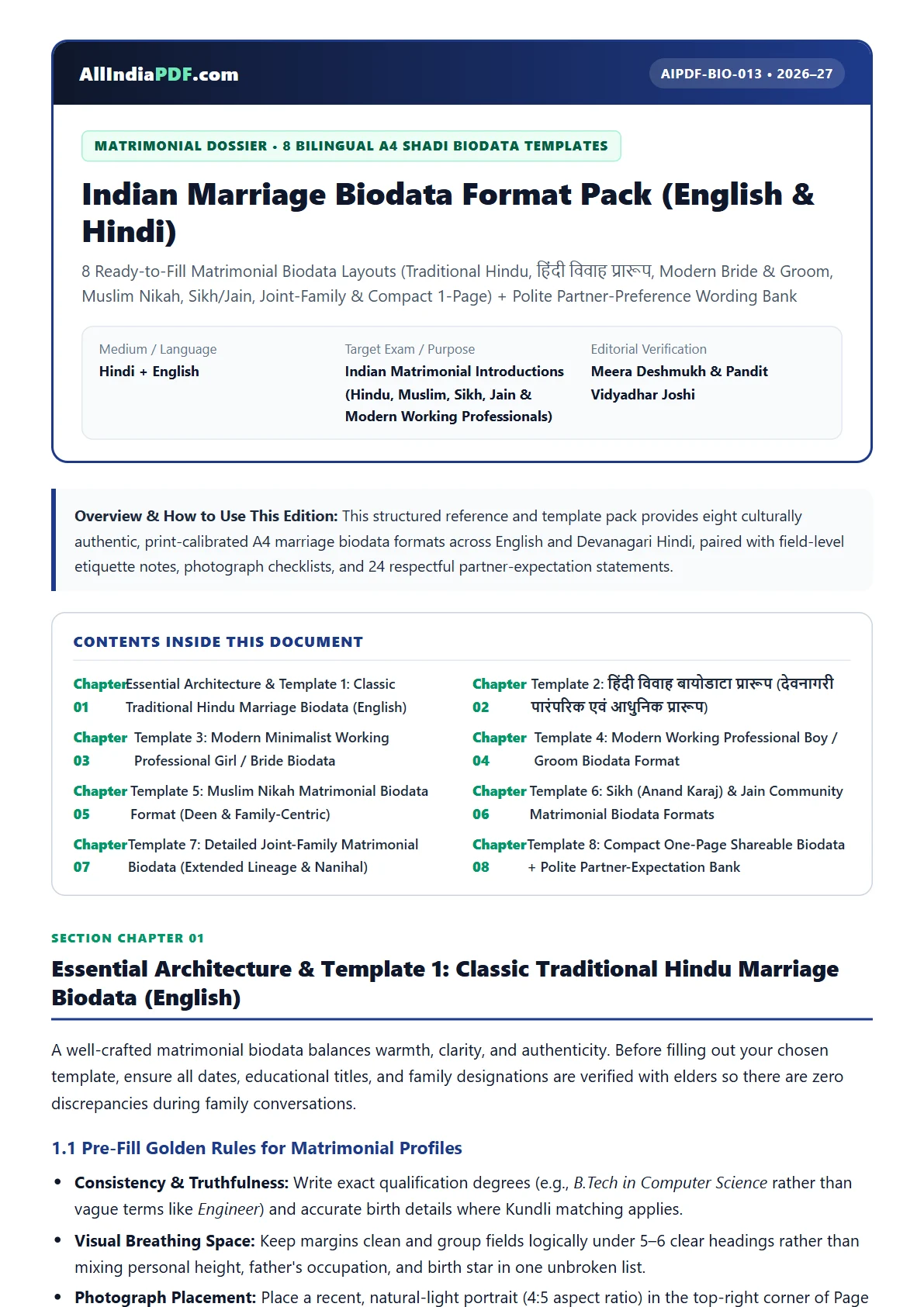
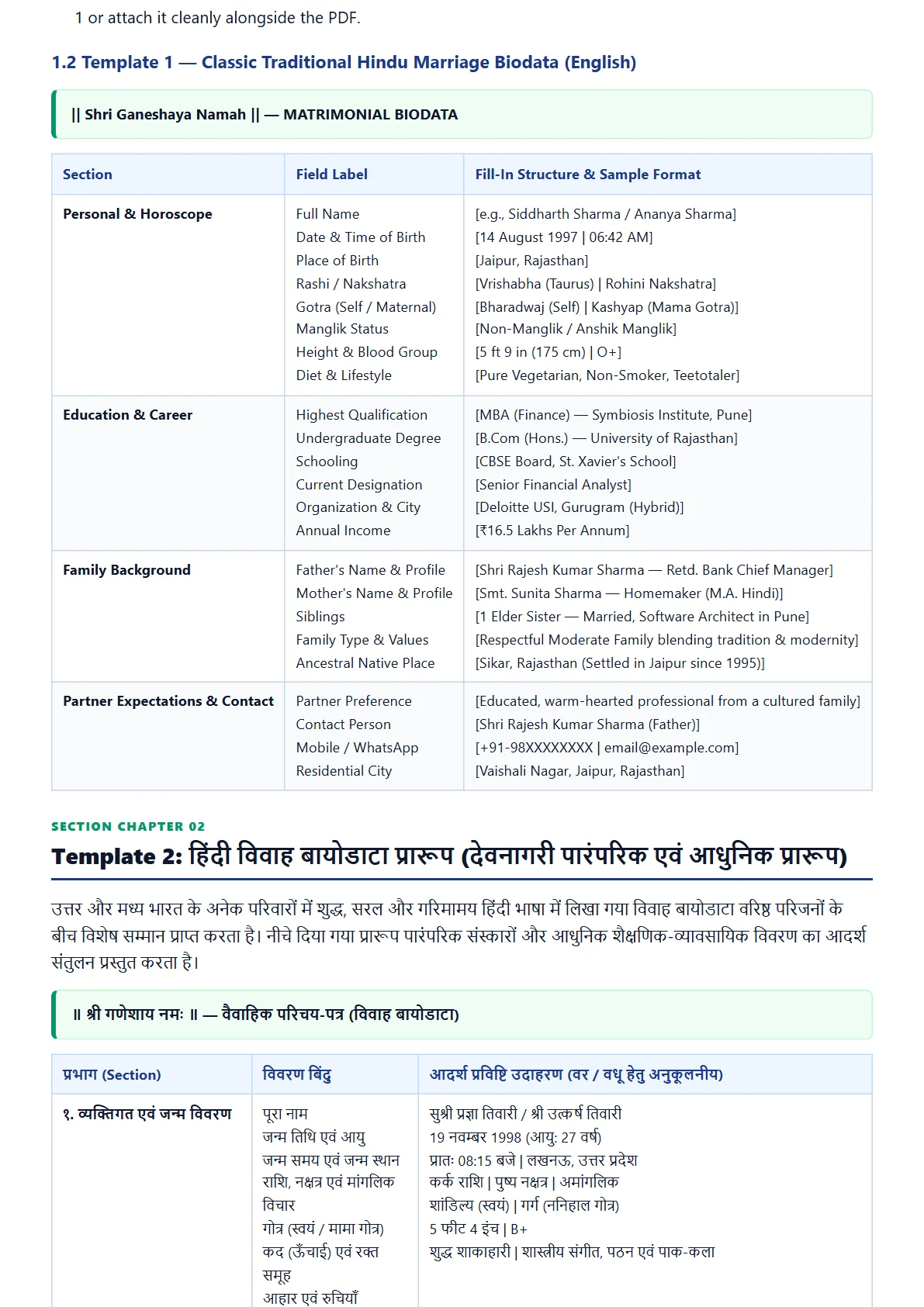
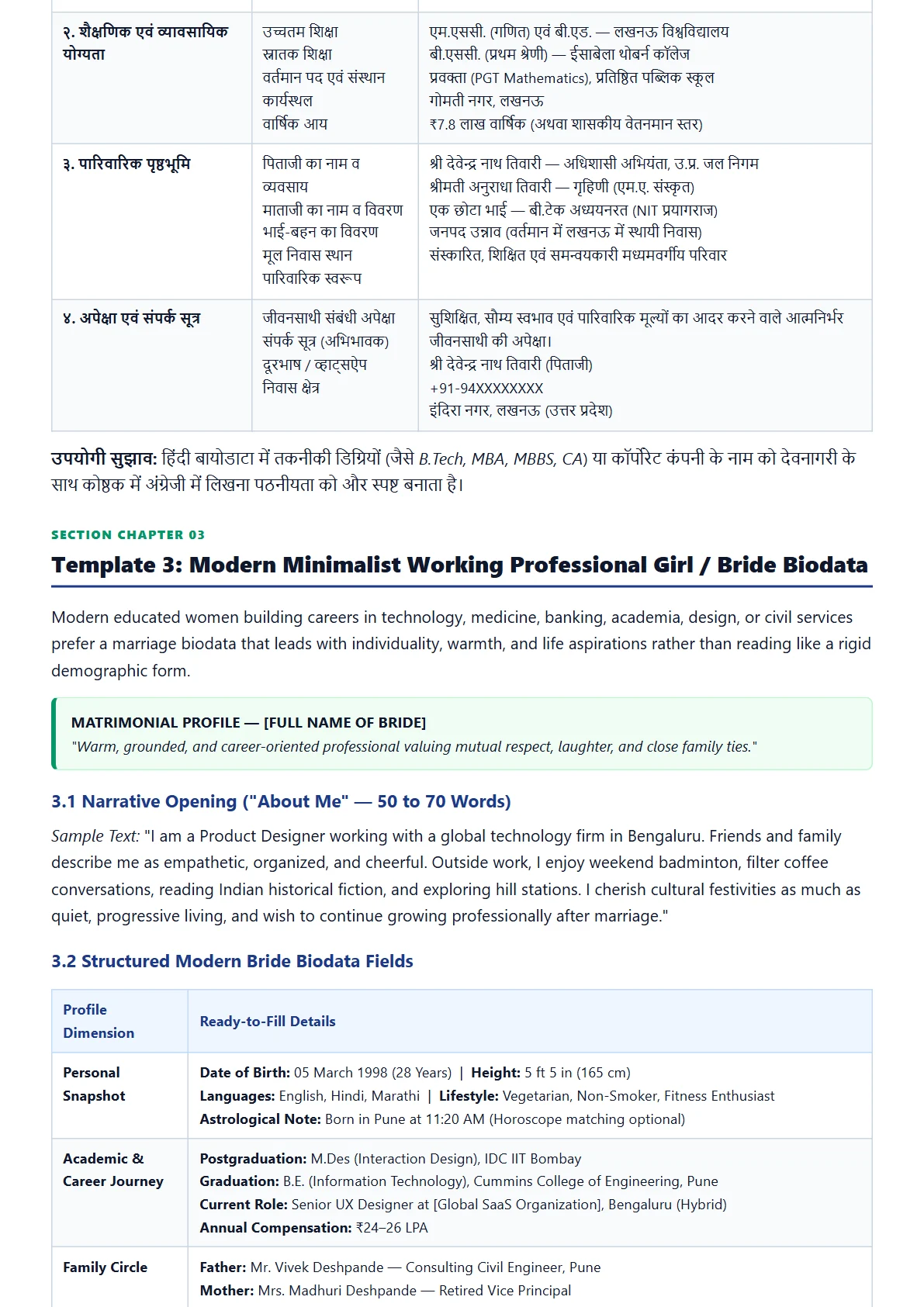
Continue Reading All 10 Full Pages Offline
Verify your email address to access the complete 10-page printable PDF with all chapters, tables, and solved examples.
In This Study Guide
- 1.1. Essential Sections of an Impressive Indian Marriage Biodata
- 2.2. Tailoring Templates Across Communities & Modern Working Profiles
- 3.3. Polite & Dignified Partner-Expectation Wording Examples
- 4.4. Photograph Selection, Salary Clarity & Digital Sharing Etiquette
- 5.Complete PDF Chapter Breakdown
- 6.Frequently Asked Questions
Key Highlights
- Includes 8 complete, print-ready A4 marriage biodata templates spanning English and pure Devanagari Hindi (विवाह बायोडाटा प्रारूप)
- Dedicated layouts for modern working brides and grooms alongside traditional Hindu, Muslim Nikah, Sikh, Jain, and joint-family formats
- Clear separation from corporate resumes—focusing on personality, education, career stability, family values, and cultural harmony
- Ready-to-use bank of 24+ polite, non-transactional partner expectation statements in both English and Hindi
- Practical etiquette guide on photograph selection, optional horoscope (Kundli) fields, CTC presentation, and WhatsApp sharing privacy
In Indian families, a matrimonial introduction begins long before two families meet over tea—it begins with a thoughtfully prepared marriage biodata format PDF. Unlike a corporate CV or job resume that lists technical deliverables and employment chronology, an Indian shadi biodata serves as a warm, dignified portrait of an individual's personality, education, career stability, cultural roots, and family environment.
Families often struggle between overly cluttered documents and rigid corporate templates that feel impersonal. Whether shared across family WhatsApp circles, community networks, or formal matchmakers, a clean layout in English or Devanagari Hindi (हिंदी विवाह बायोडाटा प्रारूप) immediately communicates sincerity, clarity, and mutual respect. Below is a section-by-section blueprint covering essential matrimonial fields, community conventions, and graceful partner-preference wording.
1. Essential Sections of an Impressive Indian Marriage Biodata
A well-balanced matrimonial profile organizes information in a natural reading sequence so both prospective partners and elders can understand compatibility at a glance. Every refined marriage biodata format PDF rests on six foundational blocks:
| Biodata Block | Core Fields to Include | Fields to Keep Optional or Omit |
|---|---|---|
| 1. Personal & Lifestyle Vitals | Full Name, Date of Birth, Age, Height, Blood Group, Complexion (optional), Diet (Vegetarian / Eggetarian / Non-Veg), Languages Known, Hobbies | Omit Aadhaar, PAN, passport numbers, or exact body weight unless specifically relevant |
| 2. Astrological / Cultural Block | Time of Birth, Place of Birth, Rashi, Nakshatra, Gotra, Manglik / Non-Manglik (for traditional Hindu/Jain profiles); Sect/Biradari (where customary) | Mark clearly as "Horoscope matching optional" for progressive or inter-community families |
| 3. Education & Career Profile | Highest Qualification, College/University, Designation, Organization Name, Work Location (Hybrid / On-site), Annual Income Band | Avoid multi-page project histories, college percentage decimals, or confidential client names |
| 4. Family Background | Father's Name & Occupation, Mother's Name & Occupation, Brothers & Sisters (marital & professional status), Native Place, Family Type | Avoid listing detailed land acreage or bank balances on an initial introductory PDF |
| 5. Partner Expectations | 3–4 warm lines covering age/height range, educational mindset, mutual respect for career and family, and preferred location flexibility | Avoid rigid checklists, negative exclusionary language, or transactional demands |
| 6. Contact & Residence | Primary Contact Person (Self / Parent), Mobile Number, Email ID, Current City & Broad Locality (e.g., Kothrud, Pune) | Share exact flat/house numbers only after initial mutual interest is established |
Maintaining clean visual hierarchy—clear section headers, consistent colon alignment, and generous line spacing—ensures that senior family members can read the document comfortably without zooming in repeatedly on mobile screens.
2. Tailoring Templates Across Communities & Modern Working Profiles
India's matrimonial landscape spans diverse linguistic, faith, and generational preferences. Using a single generic sheet often leaves out culturally meaningful details or includes irrelevant fields. Selecting the right layout among specialized formats creates immediate comfort:
- Classic Traditional Hindu & हिंदी विवाह बायोडाटा प्रारूप: Customarily opens with a brief auspicious salutation (such as Shri Ganeshaya Namah or श्री गणेशाय नमः), includes Gotra (self and maternal/Mama Gotra where observed to avoid same-gotra lineage), Janma Tithi, Janma Samay, and Janma Sthan for Kundli milan, alongside ancestral native town (Mool Niwas).
- Modern Working Professional Bride & Groom Formats: Designed for IT engineers, doctors, chartered accountants, civil servants, researchers, and entrepreneurs. These templates highlight a 3-line "About Me" narrative—covering personal temperament, fitness/reading/travel interests, work-life philosophy, and post-marriage career vision—before presenting family details.
- Muslim Nikah Matrimonial Biodata Format: Replaces astrological fields completely with respectful faith and cultural markers such as Bismillah-ir-Rahman-ir-Rahim header, religious observance (Namaz, fasting, modest lifestyle values), sect/Maslak if preferred by the family, educational credentials, profession, siblings' details, and the Wali / parent contact block.
- Sikh (Anand Karaj) & Jain Community Formats: Sikh matrimonial formats commonly begin with Ik Onkar, specify family surname/clan background if observed, Gursikh/Sehajdhari lifestyle notes, and ancestral village in Punjab or current city. Jain formats specify Digambar/Shwetambar/Terapanth tradition, dietary observance (strict vegetarian/Jain diet), and Gotra/Nanihal lineage.
- Joint-Family vs. Compact One-Page Formats: Large business or agricultural joint families often include paternal uncles (Tauji / Chachaji) and maternal uncles (Mamaji / Nanihal) to help community elders trace shared acquaintances, whereas urban nuclear families prefer a crisp single-page A4 sheet optimized for instant WhatsApp sharing.
3. Polite & Dignified Partner-Expectation Wording Examples
The "Partner Preferences" section is the most closely read—and most frequently misworded—part of a marriage biodata. Harsh phrases like "Only top MNC candidates apply" or "Must relocate immediately" can alienate otherwise wonderful matches. Compare ineffective phrasing with warm, mature alternatives:
| Context | Avoid (Rigid / Transactional) | Recommended Polite Wording (Warm & Balanced) |
|---|---|---|
| Working Bride | "Girl will strictly work after marriage; groom's family should not interfere." | "Looking for a well-educated, supportive partner who values mutual career growth, companionship, and harmonious family bonds." |
| Working Groom | "Need homely yet working girl who can manage both office and household." | "Seeking an educated, kind-hearted partner who believes in shared responsibilities, open communication, and building a warm home together." |
| Hindi Format (हिंदी प्रारूप) | "केवल उच्च आय वाले एवं समान शहर के परिवार ही संपर्क करें।" | "शिक्षित, संस्कारी एवं पारिवारिक मूल्यों का सम्मान करने वाले जीवनसाथी की अपेक्षा है, जो आपसी समझ व सहयोग में विश्वास रखते हों।" |
| Location / Transferable Role | "No outstation proposals." | "Preferably based in Delhi-NCR / Bengaluru, or open to mutually convenient metro locations." |
4. Photograph Selection, Salary Clarity & Digital Sharing Etiquette
A polished marriage biodata format PDF pairs honest text with authentic presentation. Before exporting and forwarding your profile, verify these four practical checkpoints:
- Natural, Unfiltered Photographs: Attach one clear half-length portrait in natural daylight and, optionally, one graceful full-length photograph in smart casual or traditional Indian attire. Avoid sunglasses, group crops with cropped shoulders of friends, heavy beauty filters, or studio poses from five years ago.
- Graceful Income Representation: Instead of pasting monthly take-home payslips, express earnings cleanly as an annual range—for example, "Annual Package: ₹18–20 LPA" or "Established Family Business (Annual Turnover / Income shared during family discussion)". Honesty builds trust without oversharing sensitive financial data upfront.
- PDF Over Editable Word Files: Always convert your completed biodata into a non-editable A4 PDF before sending on WhatsApp or email. Word files (
.docx) frequently suffer from broken Devanagari fonts, shifted tables, and accidental edits when opened on different smartphones. - Two-Stage Privacy Practice: Keep two versions ready—a concise introductory 1-page biodata containing city locality and parent/self contact number for initial forwarding, and a fuller 2-page family biodata shared once both sides express genuine interest.
What’s Included Inside the Complete 10-Page PDF
Structured specifically for fast revision, exam hall recall, and clean A4 printing:
8 Ready-to-Fill Matrimonial Templates (English & Hindi)
Classic Hindu English format, हिंदी विवाह बायोडाटा प्रारूप, Working Girl layout, Working Boy layout, Muslim Nikah biodata, Sikh/Jain community formats, Joint-Family detailed sheet, and Compact 1-Page WhatsApp format.
Essential 6-Block Matrimonial Architecture
Exact field-by-field structure covering Personal Vitals, Optional Astrological/Religious Details, Academic & Career Profile, Family & Sibling Overview, Lifestyle & Interests, and Contact Protocol.
Polite Partner-Expectation Wording Bank
Tactful, respectful phrasing samples for career continuity after marriage, city relocation, family values, and educational compatibility without sounding rigid or demanding.
Bilingual Terminology & Cultural Customizations
Accurate Hindi and English terms for Gotra, Rashi, Nakshatra, Manglik status, Maslak/Deen observance, Anand Karaj traditions, Nanihal (maternal lineage), and ancestral native place.
Salary, Property & Privacy Etiquette Matrix
Clear guidance on how to state annual income ranges gracefully, what sensitive ID numbers to omit, and when to share full residential addresses during matrimonial conversations.
Photograph & Print Presentation Checklist
Lighting, attire, framing, and PDF export standards so your matrimonial profile looks warm, authentic, and legible on both mobile screens and A4 paper.
Ready to download the full 10-page printable PDF?
Instant access + backup copy delivered straight to your verified email address.
Frequently Asked Questions
What is the main difference between a marriage biodata format PDF and a job biodata?+
A job biodata or resume highlights technical skills, work achievements, and career chronology for employers, whereas a marriage biodata presents personal details, educational and professional stability, family background, lifestyle habits, cultural traditions, and partner expectations for matrimonial alliances.
Is it compulsory to mention horoscope (Kundli, Gotra, Time of Birth) in an Indian shadi biodata?+
No, it is completely optional and depends on family custom. Traditional Hindu and Jain families often include Date, Time, Place of Birth, Rashi, and Gotra for Kundli matching, while many modern families write "Horoscope matching not mandatory" and Muslim or Sikh formats omit astrological fields altogether.
Should annual salary or CTC be written on a matrimonial biodata for bride and groom?+
Mentioning an honest annual income bracket (such as ₹12–15 LPA) is standard and helpful in Indian matrimonial introductions, as it sets clear practical expectations. Self-employed professionals or business families may mention business nature and share exact financials during direct family conversations.
Which language is better for marriage biodata—English or Hindi?+
Both are widely respected. Urban working professionals and pan-India proposals typically use English, while families across North and Central India often prefer a pure Devanagari Hindi format (विवाह बायोडाटा प्रारूप) so grandparents and senior relatives can read every detail effortlessly.
How many pages should an ideal marriage biodata PDF have?+
One to two A4 pages is ideal. A clean single-page layout works best for modern nuclear-family profiles and quick WhatsApp sharing, while a structured two-page layout suits detailed joint-family profiles that include extended paternal and maternal (Nanihal) lineage.
Editorial Accuracy & Syllabus Verification (2026–27)
This guide was compiled by Meera Deshmukh & Pandit Vidyadhar Joshi (Family Communication Consultant & Cultural Documentation Specialist) and reviewed by Dr. Vandana Kulkarni (Senior Sociologist & Bilingual Editorial Reviewer (Hindi–English)) in accordance with our Editorial Policy. Found a syllabus update or typo? Write to support@allindiapdf.com.